Short answer
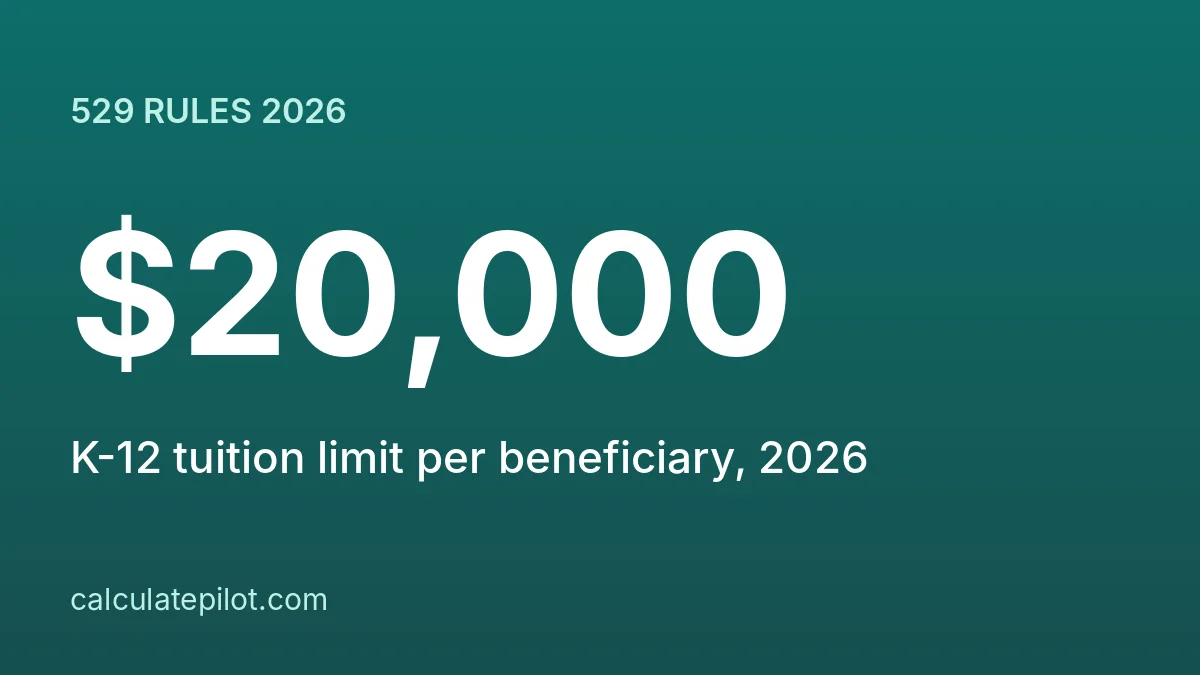
In 2026 a 529 can pay up to $20,000 a year for K-12 tuition, plus college costs and recognised credential programs. You can contribute $95,000 per child at once ($190,000 for a couple) using the five-year gift election. Non-qualified withdrawals pay income tax and a 10% additional tax on the earnings.
1. What a 529 can pay for
- College: tuition, fees, books and — for students enrolled at least half-time — room and board.
- K-12 tuition: up to $20,000 a year per beneficiary in 2026 (previously $10,000). Check whether your state follows the federal treatment.
- Credentialing: tuition, fees, books, supplies and exam costs for recognised credential programs, including some continuing education to maintain a credential.
2. Contribution and gift limits
| Rule (2026) | Single giver | Married couple (gift splitting) |
|---|---|---|
| Annual gift tax exclusion per child | $19,000 | $38,000 |
| Five-year election, one lump sum per child | $95,000 | $190,000 |
With the five-year election you make no other gifts to that child during the period. Each state sets its own total balance cap for accounts.
3. Withdrawals that are not qualified
- The earnings portion is subject to income tax plus a 10% additional tax.
- Your contributions come back without tax or penalty.
- Exceptions to the 10% tax include the beneficiary's death or disability and certain scholarships.
4. Plan your savings
Use the 529 College Savings Calculator to project the balance and monthly deposit. For leftover funds, read the 529-to-Roth IRA rollover rules.
5. Frequently asked questions
Can a 529 pay for private school before college?expand_more
Yes. In 2026 up to $20,000 a year per beneficiary can go to K-12 tuition tax-free federally. State rules may differ.
How much can I put into a 529 at once?expand_more
A single giver can contribute up to $95,000 per child using the five-year election, or $190,000 for a married couple, with no other gifts to that child in the period.
What is the penalty for a non-qualified 529 withdrawal?expand_more
The earnings are taxed as income and carry a 10% additional tax. The contribution portion is not taxed.
Do these rules apply to every state?expand_more
The federal rules do. Many states have their own deductions, balance limits and treatment of K-12 withdrawals, so check your plan.