Short answer
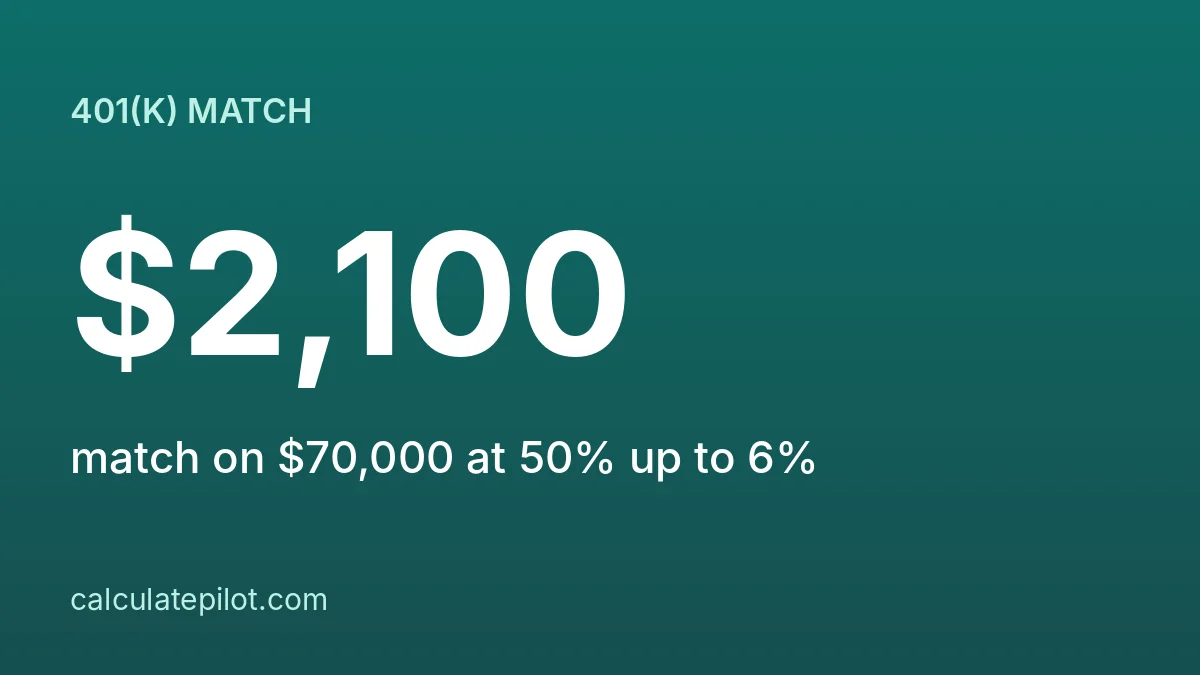
To get the full match, contribute at least the percentage of salary the match is capped at. With a 50% match up to 6%, saving 6% of a $70,000 salary ($4,200) earns $2,100 from your employer; saving more earns no extra match.
1. How a match formula works
A formula such as "50% up to 6%" means the employer adds 50 cents for every dollar you contribute, on contributions up to 6% of your salary. The most it can pay is 50% of 6% = 3% of salary.
2. Three formulas on a $70,000 salary
| Formula | Save 3% | Save 6% | Save 10% |
|---|---|---|---|
| 50% up to 6% | $1,050 | $2,100 | $2,100 |
| 100% up to 4% | $2,100 | $2,800 | $2,800 |
| 100% up to 3% | $2,100 | $2,100 | $2,100 |
Saving less than the cap leaves match money unclaimed. Saving more than the cap earns no extra match, but still builds your savings and may lower your taxes.
3. Check these in your plan
- The exact formula and whether it is calculated per paycheque or per year.
- Vesting. Some employers require years of service before the match is fully yours. See the vesting section of the calculator page.
- Annual limit. Your own contributions are capped by the IRS. See the 2026 limits.
4. See what the match is worth over a career
Enter your formula in the Employer Match Structure box. In the calculator's worked example (a 30-year-old on $70,000 with 3% raises, a 50% match up to 6% and a 7% return), the employer adds about $127,000 over 35 years, and the balance reaches about $1.51 million.
5. Frequently asked questions
How do I get the full 401(k) match?expand_more
Contribute at least the percentage of salary your match is capped at. With a 50% match up to 6%, that is 6%.
Is a 401(k) match guaranteed?expand_more
No. Employers choose whether to offer one and may change it. Some also require vesting before the match is yours.
Do I get a match if I contribute more than the cap?expand_more
You still get the full match but no more. Contributions above the cap earn no extra employer money.
Does the match count toward my contribution limit?expand_more
No. Employer contributions do not count toward your own $24,500 limit in 2026.