Short answer
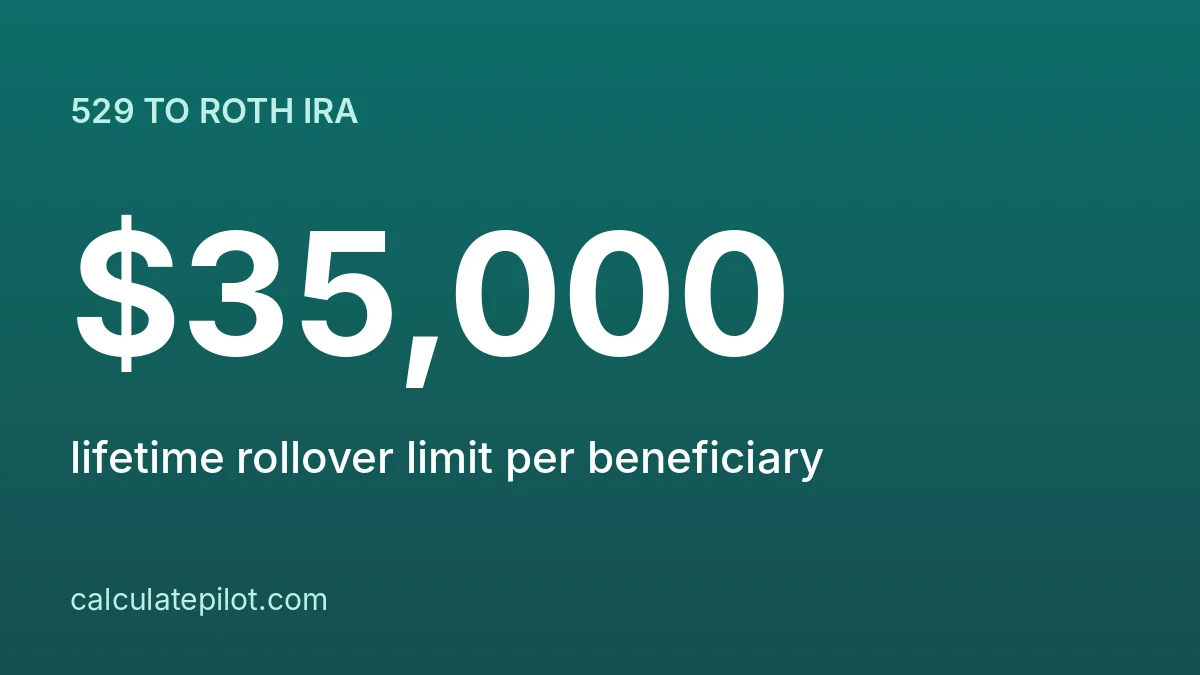
Under SECURE 2.0 you can roll up to $35,000 over your lifetime from a 529 to the beneficiary's Roth IRA if the 529 has been open for at least 15 years. Funds moved must have been in the account at least 5 years, and each year's rollover is capped by the annual Roth IRA contribution limit.
1. The conditions
- The 529 account has been open for at least 15 years.
- The money rolled over (and its earnings) has been in the account at least 5 years.
- The 529 beneficiary and the Roth IRA owner are the same person.
- Lifetime limit: $35,000 per beneficiary.
- Each year's rollover is limited by that year's Roth IRA contribution limit, reduced by any other IRA contributions the beneficiary makes that year. The 2026 IRA limit is $7,500.
2. Worked timeline
At the 2026 limit of $7,500 a year with no other IRA contributions, a $35,000 rollover takes five years:
| Year | Rolled over | Running total |
|---|---|---|
| 1 | $7,500 | $7,500 |
| 2 | $7,500 | $15,000 |
| 3 | $7,500 | $22,500 |
| 4 | $7,500 | $30,000 |
| 5 | $5,000 | $35,000 |
The annual limit is indexed, so it may be higher in later years and shorten the timeline slightly.
3. Why open a 529 early
The 15-year clock starts when the account opens, so an account opened at a child's birth can qualify while they are still in their teens or twenties. Check whether your state taxes or recaptures benefits on such a rollover.
Plan the balance with the 529 College Savings Calculator, then see the other 2026 529 rules.
4. Frequently asked questions
Can I roll a 529 into a Roth IRA?expand_more
Yes, to the beneficiary's own Roth IRA, up to $35,000 over a lifetime, if the 529 has been open at least 15 years.
How long does a $35,000 529-to-Roth rollover take?expand_more
At the 2026 limit of $7,500 a year, five years: four years of $7,500 and a final $5,000.
Do all the funds in the 529 qualify for rollover?expand_more
No. Funds that have been in the account less than 5 years do not qualify.
Does my state tax a 529 to Roth rollover?expand_more
It depends. Some states treat it as a non-qualified withdrawal, so check your state's rules.