Short answer
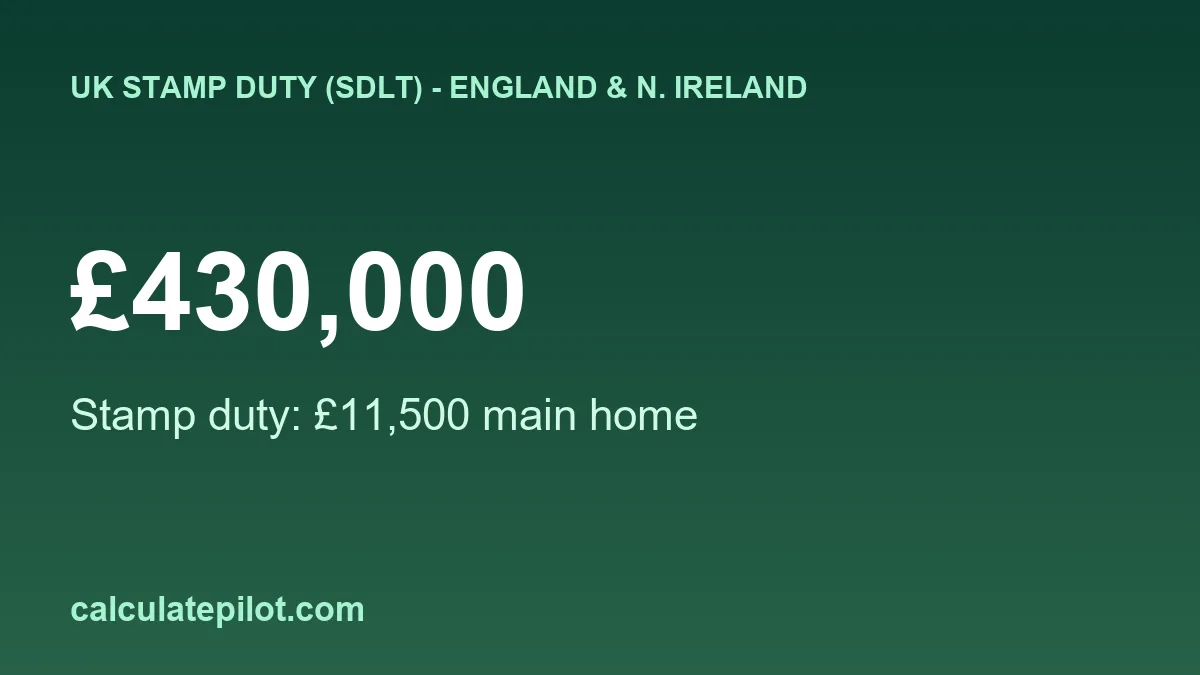
Stamp duty on a £430,000 property in England and Northern Ireland is £11,500, or £6,500 for a first-time buyer. A second home or buy-to-let costs £33,000. These figures use the rates in force from 1 April 2025.
1. Stamp duty on £430,000 at a glance
| Buyer | Stamp duty | Effective rate |
|---|---|---|
| Main home (standard rates) | £11,500 | 2.67% |
| First-time buyer | £6,500 | 1.51% |
| Second home or buy-to-let (+5%) | £33,000 | 7.67% |
| Non-UK resident, main home (+2%) | £20,100 | 4.67% |
| Non-UK resident, additional property (+7%) | £41,600 | 9.67% |
At £430,000 the price spans three bands: nil, 2% and 5%, so the working below is a good model for most mid-priced homes.
2. How the £11,500 is worked out
Stamp duty is marginal: each slice of the price is charged at the rate for its own band, not the whole price at one rate. For £430,000 the standard working is:
| Band | Rate | Taxable slice | Tax |
|---|---|---|---|
| £0 to £125,000 | 0% | £125,000 | £0 |
| £125,000 to £250,000 | 2% | £125,000 | £2,500 |
| £250,000 to £430,000 | 5% | £180,000 | £9,000 |
The bill is the sum of the Tax column, £11,500. That is an effective rate of 2.67% of the price.
3. First-time buyer stamp duty on £430,000
A first-time buyer pays £6,500 (nil up to £300,000, then 5% to £500,000). That saves £5,000 against the standard rates.
4. Second home or buy-to-let on £430,000
The higher rates add 5% to every band, so the same purchase as an additional residential property costs £33,000, which is £21,500 more than a main home. The surcharge applies when you buy a residential property for £40,000 or more and still own another one at the end of the purchase day. If you are replacing your main home you may be able to reclaim the surcharge: see our guide to stamp duty on a second home or buy-to-let.
| Band | Rate | Taxable slice | Tax |
|---|---|---|---|
| £0 to £125,000 | 5% | £125,000 | £6,250 |
| £125,000 to £250,000 | 7% | £125,000 | £8,750 |
| £250,000 to £430,000 | 10% | £180,000 | £18,000 |
5. What a little more or less would cost
Each extra £10,000 on the price adds about £500 of stamp duty at this level (the marginal rate is 5%). Moving from £430,000 to £455,000 would raise the main-home bill from £11,500 to £12,750, a difference of £1,250.
6. Frequently asked questions
How much stamp duty do you pay on £430,000?expand_more
In England and Northern Ireland, the standard SDLT on £430,000 is £11,500 (an effective rate of 2.67%). A first-time buyer pays £6,500, and an additional property such as a second home or buy-to-let pays £33,000.
Is stamp duty on £430,000 different for a second home?expand_more
Yes. The higher rates add 5% to every band, so a second home or buy-to-let at this price costs £33,000, which is £21,500 more than a main home.
Do non-UK residents pay more stamp duty on £430,000?expand_more
Yes. A further 2% applies to all residential bands, making the main-home figure £20,100. A non-UK resident buying an additional property pays £41,600.
Does this apply in Scotland or Wales?expand_more
No. Scotland charges LBTT and Wales charges LTT, with different bands and rates. These figures are for England and Northern Ireland only.