Short answer
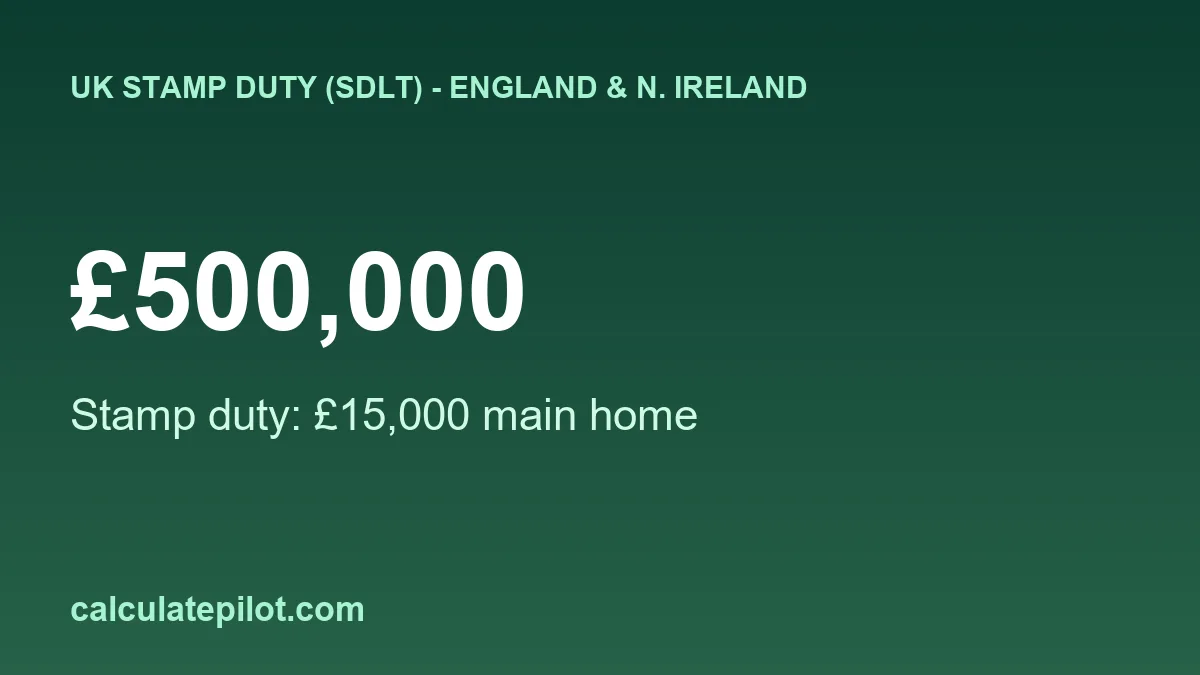
Stamp duty on a £500,000 property in England and Northern Ireland is £15,000, or £10,000 for a first-time buyer. A second home or buy-to-let costs £40,000. These figures use the rates in force from 1 April 2025.
1. Stamp duty on £500,000 at a glance
| Buyer | Stamp duty | Effective rate |
|---|---|---|
| Main home (standard rates) | £15,000 | 3.00% |
| First-time buyer | £10,000 | 2.00% |
| Second home or buy-to-let (+5%) | £40,000 | 8.00% |
| Non-UK resident, main home (+2%) | £25,000 | 5.00% |
| Non-UK resident, additional property (+7%) | £50,000 | 10.00% |
Half a million is a common asking price, and it is also the exact edge of first-time buyer relief.
2. How the £15,000 is worked out
Stamp duty is marginal: each slice of the price is charged at the rate for its own band, not the whole price at one rate. For £500,000 the standard working is:
| Band | Rate | Taxable slice | Tax |
|---|---|---|---|
| £0 to £125,000 | 0% | £125,000 | £0 |
| £125,000 to £250,000 | 2% | £125,000 | £2,500 |
| £250,000 to £500,000 | 5% | £250,000 | £12,500 |
The bill is the sum of the Tax column, £15,000. That is an effective rate of 3.00% of the price.
3. First-time buyer stamp duty on £500,000
A first-time buyer pays £10,000 (nil up to £300,000, then 5% to £500,000). That saves £5,000 against the standard rates.
£500,000 is the highest price at which first-time buyer relief still applies. Paying even £1 more removes it completely and the whole purchase is charged at standard rates, which turns £10,000 into £15,000 (a £5,000 jump).
4. Second home or buy-to-let on £500,000
The higher rates add 5% to every band, so the same purchase as an additional residential property costs £40,000, which is £25,000 more than a main home. The surcharge applies when you buy a residential property for £40,000 or more and still own another one at the end of the purchase day. If you are replacing your main home you may be able to reclaim the surcharge: see our guide to stamp duty on a second home or buy-to-let.
| Band | Rate | Taxable slice | Tax |
|---|---|---|---|
| £0 to £125,000 | 5% | £125,000 | £6,250 |
| £125,000 to £250,000 | 7% | £125,000 | £8,750 |
| £250,000 to £500,000 | 10% | £250,000 | £25,000 |
5. What a little more or less would cost
Each extra £10,000 on the price adds about £500 of stamp duty at this level (the marginal rate is 5%). Moving from £500,000 to £550,000 would raise the main-home bill from £15,000 to £17,500, a difference of £2,500.
6. Frequently asked questions
How much stamp duty do you pay on £500,000?expand_more
In England and Northern Ireland, the standard SDLT on £500,000 is £15,000 (an effective rate of 3.00%). A first-time buyer pays £10,000, and an additional property such as a second home or buy-to-let pays £40,000.
Is stamp duty on £500,000 different for a second home?expand_more
Yes. The higher rates add 5% to every band, so a second home or buy-to-let at this price costs £40,000, which is £25,000 more than a main home.
Do non-UK residents pay more stamp duty on £500,000?expand_more
Yes. A further 2% applies to all residential bands, making the main-home figure £25,000. A non-UK resident buying an additional property pays £50,000.
Does this apply in Scotland or Wales?expand_more
No. Scotland charges LBTT and Wales charges LTT, with different bands and rates. These figures are for England and Northern Ireland only.