Short answer
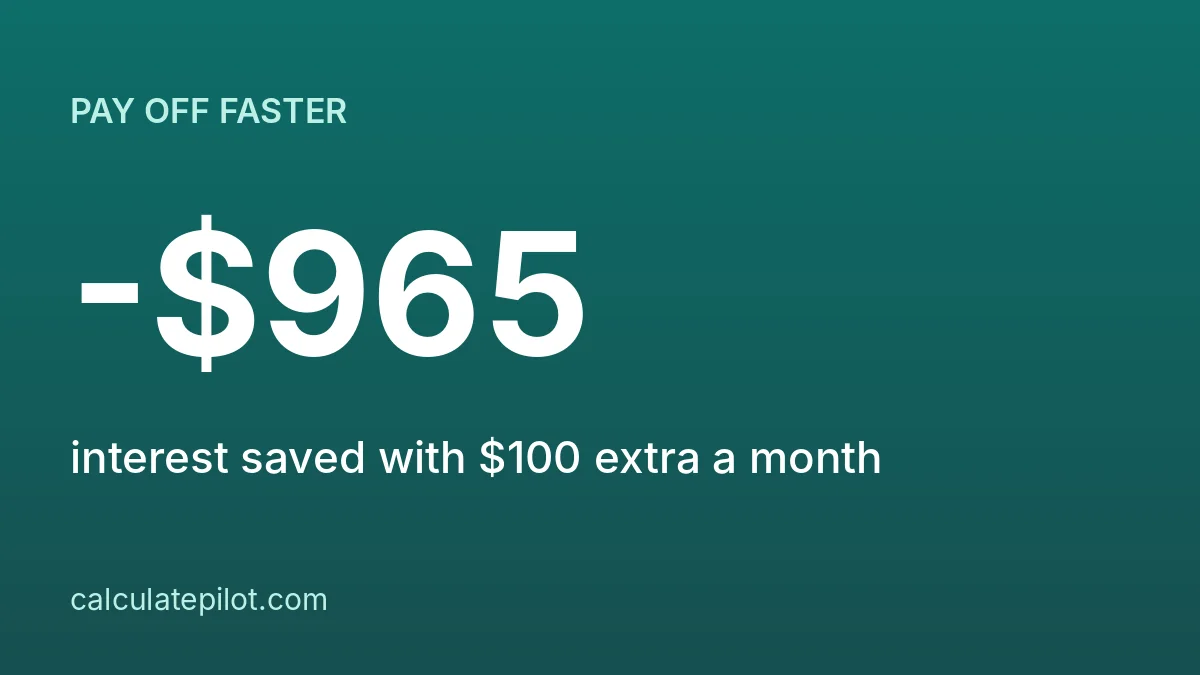
Paying $100 extra each month on a $20,000, 7.5%, 60-month loan pays it off in 47 months and cuts total interest from $4,046 to about $3,081, saving about $965, as long as the extra is applied to principal.
1. Example: $20,000 at 7.5% for 60 months
The scheduled payment is $400.76. Total interest is $4,046.
| Extra per month | Payoff time | Total interest | Interest saved |
|---|---|---|---|
| $0 | 60 months | $4,046 | $0 |
| $50 | 53 months | $3,497 | $549 |
| $100 | 47 months | $3,081 | $965 |
| $200 | 38 months | $2,494 | $1,552 |
2. Why it works
Interest is charged on the remaining balance. Early on, most of each payment is interest (in this example $125 of the first $400.76). Extra money reduces the balance sooner, so every later month charges less interest.
3. Make sure it counts
- Tell the lender the extra is for principal, not to prepay future instalments.
- Check the agreement for a prepayment penalty. Most personal loans have none, but some auto, business and specialty loans do.
- Keep an emergency cushion so you do not need to borrow again.
4. Try your own numbers
Enter your loan in the Loan Calculator and add an extra monthly payment to see the new payoff date. For fees, see APR vs interest rate.
5. Frequently asked questions
Does paying extra each month reduce total interest?expand_more
Yes, if the extra goes to principal. On a $20,000, 7.5%, 60-month loan, $100 extra a month saves about $965 in interest.
How much sooner will I pay off my loan with extra payments?expand_more
$100 extra a month pays that loan off in 47 months instead of 60. $200 extra pays it off in 38.
Is there a penalty for paying off a loan early?expand_more
It depends on the lender. Most personal loans have none, but some auto, business and specialty loans do, so check your agreement.
Should I pay extra or build savings first?expand_more
Many people keep a small emergency fund first so unexpected costs do not go back on credit, then add extra payments.